Laryngoscope
_small.webp)
Loading details...
A laryngoscope is one of those instruments every OT, ICU, and ambulance kit relies on but rarely talks about, a handheld device that gives a clinician a clear line of sight to the larynx and vocal cords, usually so they can pass a breathing tube during anesthesia, resuscitation, or any airway emergency. At Equipmedy, we stock everything from the standard reusable sets’ hospitals have used for decades to fiber optic and portable video models built for tougher cases.
If you're stocking an OT trolley, restocking an ICU cart, or need something rugged enough to throw in an ambulance bag, the notes below should help you land on the right laryngoscope, and understand why the prices swing so widely from one model to the next.
Its main job is airway visualization getting the epiglottis and vocal cords into clear view so a tube can be placed safely. But that's not all it's used for:
Conventional (direct) laryngoscopes are still the workhorse in most Indian hospitals a handle, a set of Macintosh (curved) or Miller (straight) blades in adult, pediatric, and infant sizes, and an LED bulb doing the work older fiber and Xenon lamps used to do. They're cheap to buy, easy to sterilize, and last for years, which is exactly why they haven't gone anywhere.
Fiber optic laryngoscopes step things up a notch. Light travels through the blade itself rather than bouncing off a separate bulb, which gives a brighter, more even view genuinely useful when an airway is harder to visualize than usual. Think of it as the middle ground between a basic set and a full video system, both in what it does and what it costs.
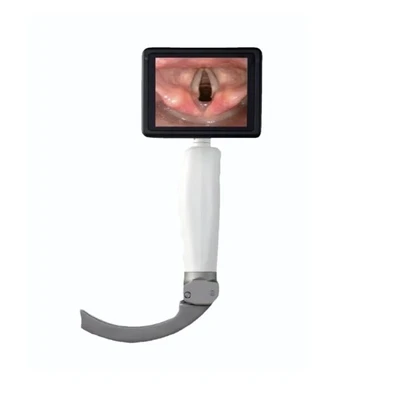
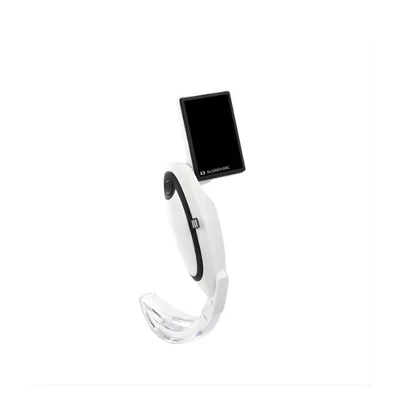
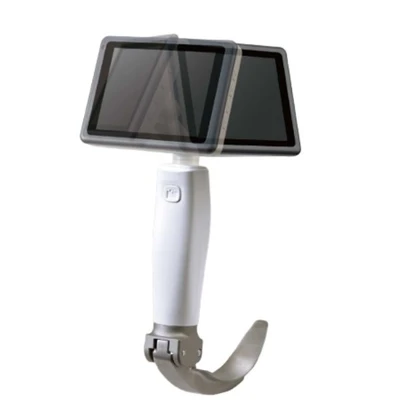
Video laryngoscopes, including the portable ones, put a small camera near the tip of the blade and stream the image to a screen. That means the person intubating (and anyone assisting) gets an indirect view that's often clearer than what the naked eye can manage which is a big part of why video laryngoscopy has become the go-to approach in a lot of difficult-airway protocols. The portable versions in this category are built with rechargeable batteries, rotating screens, and drop-resistant bodies, aimed squarely at ambulances, emergency departments, and anywhere a full OT setup isn't an option.
During intubation, the laryngoscope blade lifts the tongue and epiglottis out of the way so the trachea lines up and the tube can go in cleanly. The blade shape changes how that happens:
Getting the blade type and size right for the patient in front of you matters more than most people give it credit for, it's often the difference between a smooth intubation and a stressful one.
|
Type |
Typical Price Range (INR) |
|
Basic/conventional set (Macintosh/Miller, LED) |
₹1,000 – ₹7,000 |
|
Fiber optic set |
₹8,000 – ₹85,000 |
|
Portable/handheld video laryngoscope |
₹45,000 – ₹1,20,000 |
|
Advanced hospital-grade video systems |
₹1,20,000 – ₹4,50,000+ |
Actual pricing depends on the supplier, blade count, screen quality, and warranty — check the live product listing for exact numbers.
A few things push the laryngoscope cost up or down:
There's no single best laryngoscope, there's a best one for your situation. A few questions worth asking yourself before you buy:
A portable laryngoscope is really built around three things: it has to be small, it has to survive rough handling, and it can't die on you mid-shift. What to look for:
These days, you'll find them standard in ambulances, disaster-response kits, and home healthcare setups — anywhere a full anesthesia trolley just isn't practical.
Here's what you get when you buy from us: