Overview
When it comes to patient care, even a small medication error can create serious complications. That’s why infusion pumps have become an essential part of modern hospitals, ICUs, nursing homes, and clinics. From delivering IV fluids to critical medications, an infusion pump helps medical professionals maintain accuracy, consistency, and patient safety. But with so many options available in the market, choosing the right infusion pump can become confusing — especially when every brand claims to offer the best technology. This infusion pump buying guide will help hospitals, doctors, and clinics understand what actually matters before purchasing an infusion pump in India.
What is an Infusion Pump?
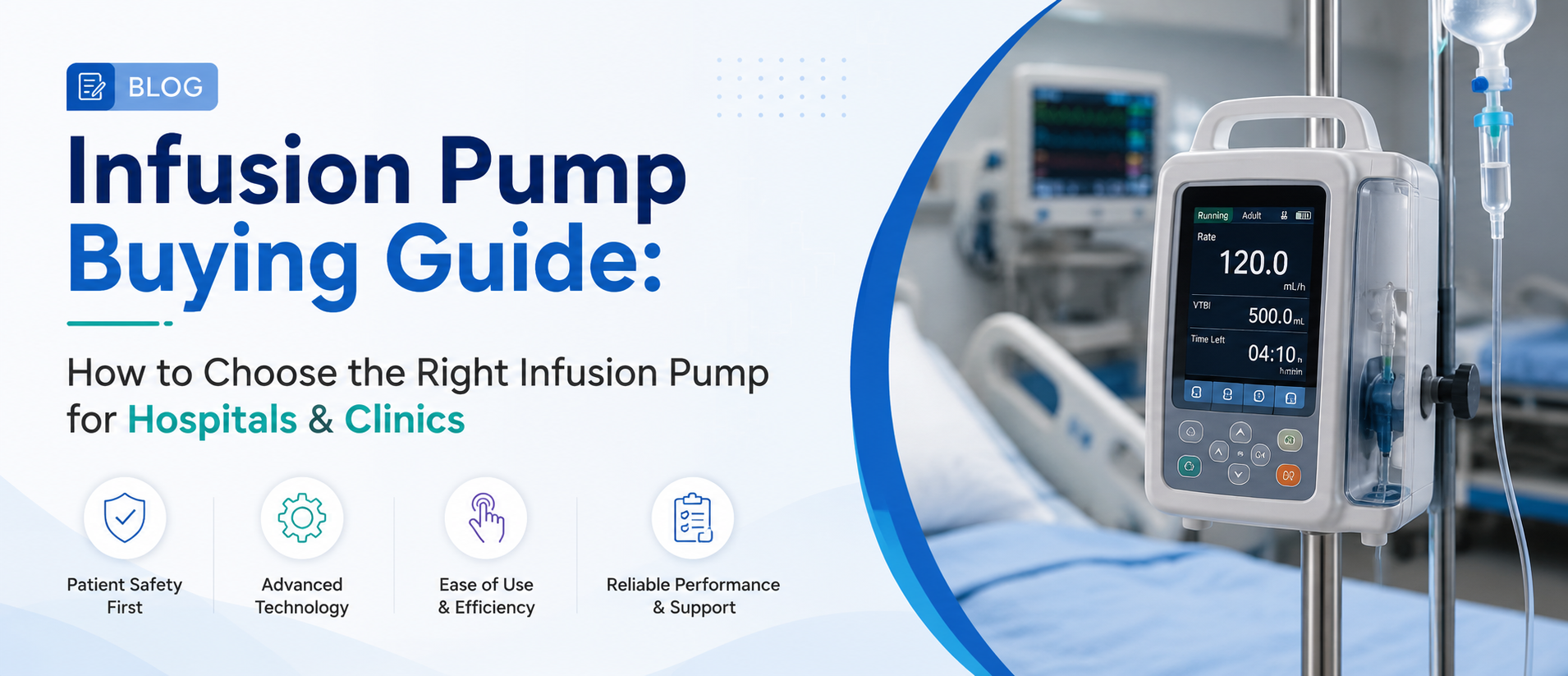
An infusion pump is a medical device used to deliver fluids, medications, nutrients, or blood into a patient’s body in a controlled manner. Unlike manual IV administration, infusion pumps provide accurate flow rates and continuous monitoring during treatment. These devices are commonly used in:
-
ICUs
-
Operation theatres
-
Emergency rooms
-
NICUs
-
Oncology departments
-
Daycare centers
-
General wards
Today, infusion pumps are considered a standard requirement in almost every healthcare facility because they improve treatment precision and reduce manual workload.
Types of Infusion Pumps
Before buying, it is important to understand the different types of infusion pumps available.
Volumetric Infusion Pump
A volumetric infusion pump is mainly used for large-volume fluid delivery. It is one of the most commonly used pumps in hospitals. Best suited for:
-
IV fluid administration
-
Antibiotics
-
Blood transfusion
-
Nutrition therapy
These pumps are widely used in general wards, ICUs, and post-operative care.
Syringe Infusion Pump
A syringe infusion pump is designed for highly precise medication delivery in small quantities. Best suited for:
-
NICU
-
ICU
-
Anaesthesia
-
Critical care medication
If your hospital handles sensitive drug administration, syringe pumps are extremely important because even tiny dosage variations can affect patient outcomes.
Portable or Ambulatory Infusion Pump
Portable infusion pumps are lightweight and battery-operated, allowing easy movement during treatment. Best suited for:
-
Home healthcare
-
Long-duration therapy
-
Outpatient treatment
Important Features to Check Before Buying an Infusion Pump
Many buyers focus only on price, but that often leads to problems later. Here are the key factors hospitals and clinics should consider before investing in an infusion pump.
Flow Rate Accuracy
Accuracy is one of the most important features in any infusion pump. In critical care environments, the device should deliver medication exactly as programmed. For ICU and neonatal care, high precision becomes even more important.
Safety Alarm System
A good infusion pump should include multiple safety alarms such as:
-
Occlusion alarm
-
Air bubble detection
-
Low battery alert
-
Door open alert
-
Flow error warning
These alarms help healthcare staff respond quickly during emergencies and improve patient safety.
Battery Backup
Power interruptions are still common in many healthcare facilities. A strong battery backup ensures uninterrupted medication delivery during patient transport or electricity failure.
Easy-to-Use Interface
Nurses and medical staff use infusion pumps continuously throughout the day. A simple interface with clear controls and readable display helps reduce operational errors and training time.
Compatibility with Consumables
Always check whether the pump supports standard IV sets and syringes available in the market. Some devices require brand-specific consumables, which can increase long-term costs.
How to Choose the Right Infusion Pump for Your Hospital or Clinic
For Small Clinics
A basic infusion pump with standard safety alarms and reliable accuracy is usually enough for routine IV administration.
For Hospitals & ICUs
Hospitals should look for advanced infusion pumps with:
-
Better accuracy
-
Multiple infusion modes
-
Smart safety features
-
Long battery backup
-
Reliable after-sales support
For NICU & Critical Care
Precision is the highest priority in critical care settings. Syringe infusion pumps with ultra-low flow rate accuracy are generally preferred for neonatal and ICU applications.
Common Mistakes Buyers Should Avoid
Many healthcare facilities make purchasing decisions too quickly. Here are some common mistakes to avoid:
-
Choosing only based on low price
-
Ignoring service availability
-
Buying without checking warranty support
-
Overlooking staff usability
-
Ignoring safety features
A cheaper infusion pump may save money initially, but poor performance and maintenance issues can increase costs later.
Conclusion
An infusion pump is not just another medical device, it plays a direct role in patient safety and treatment accuracy. Whether you are setting up a new hospital, upgrading your ICU, or expanding a clinic, investing in the right infusion pump is extremely important. The ideal infusion pump should offer reliable performance, accurate medication delivery, strong safety features, and dependable service support. Taking time to compare features properly can help hospitals make a smarter long-term investment while improving overall patient care.